
CLOCKHOUSE
  • Home
  • Past
    • Volume Twelve >
      • Editor's Note 12
      • Contents 12
      • Excerpts 12
      • Contributors 12
      • Masthead 12
    • Volume Eleven >
      • Editor's Note 11
      • Contents 11
      • Excerpts 11
      • Contributors 11
      • Masthead 11
    • Volume Ten >
      • Editor's Note 10
      • Contents 10
      • Excerpts 10
      • Contributors 10
      • Masthead 10
    • Volume Nine >
      • Editor's Note 9
      • Contents 9
      • Excerpts 9
      • Contributors 9
      • Masthead 9
    • Volume Eight >
      • Editor's Note 8
      • Contents 8
      • Excerpts 8
      • Interview 8
      • Contributors 8
      • Masthead 8
    • Volume Seven >
      • Editor's Note 7
      • Contents 7
      • Excerpts 7
      • Interview 7
      • Contributors 7
    • Volume Six >
      • Editor's Note 6
      • Contents 6
      • Excerpts 6
      • Interview 6
      • Contributors 6
    • Volume Five >
      • Editor's Note 5
      • Contents 5
      • Excerpts 5
      • Interview 5
      • Contributors 5
    • Volume Four >
      • Editor's Note 4
      • Contents 4
      • Excerpts 4
      • Interview 4
      • Contributors 4
    • Volume Three >
      • Editor's Note 3
      • Contents 3
      • Excerpts 3
      • Interview 3
      • Contributors 3
    • Volume Two >
      • Editor's Note 2
      • Contents 2
      • Excerpts 2
      • Contributors 2
    • Volume One >
      • Introductory Note 1
      • Contents 1
      • Excerpts 1
      • Contributors 1
  • Submit
  • Order
Our Mission Statement:

Dare.  Risk.  Dream.  Share. Ruminate.
How do we understand our place in the world, our responsibility to each other?
CLOCKHOUSE is an eclectic conversation about the work-in-progress of life -- a soul arousal,
a testing ground, a new community, a call for change.
Join in.


This Weekend, Clockhouse submissions period opens!

8/11/2021

0 Comments

 
Picture
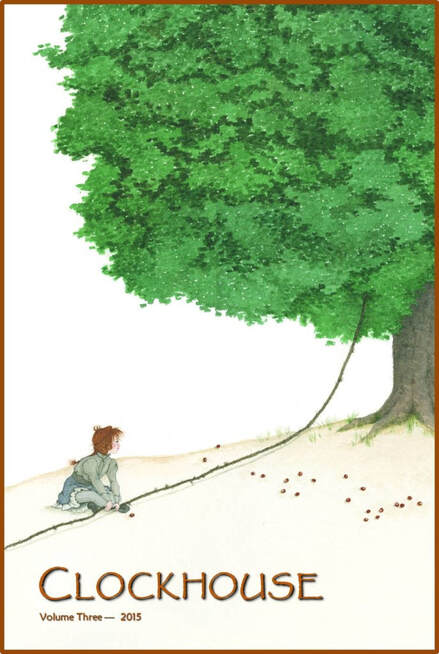
The CLOCKHOUSE Volume Nine submissions period opens on August 15.  In the meantime, here's an excerpt from Volume Three:

from Jennifer Pullen’s Little Red Riding Hood(s), a work of fiction:

                                                                             I

Little Red Riding Hood isn’t really named Little Red Riding Hood, her name is Elizabeth, or Mary, or some other good English name. Regardless of whether her name is Mary or Elizabeth she always loves the smell of her mother’s baking, the way she can wake up as dawn wipes gray out of the sky, and even though she has to go milk the cows, gather eggs and pull water from the well, she’s happy. She’s happy because the smell of bread fills her nostrils and makes her feel loved and cared for. Everyone acknowledges her mother as the best baker in the village. Everyday her mother sends her down the path to the edge of the forest to her grandmother’s cottage with a loaf of bread in a basket, because her mother says that a daughter’s duty (she looks pointedly at Mary/Elizabeth as she says this) is to take care of an aging mother. So, Mary/Elizabeth walks down the path every day and brings a loaf of bread.

But one day she gets a riding hood of bright scarlet from the church charity bin, and the story starts to swallow her name. If you watch carefully you might be able to see the story lurking in the dusty corners of that church waiting to envelop her. The hood is red and soft and warm and looks like nothing her family could ever afford. Red dye is expensive, red dye belongs to the rich, red dye screams for attention. A grown woman might have one red kirtle for feast days, but only a rich person would make a red riding hood for a little girl. But Mary/Elizabeth gets the hood and then wears it on the walk to her grandmother’s. Wolves can’t see the color red (lacking the appropriate cones to do so), but that doesn’t stop the wolf from seeing the girl and smelling her blood in her veins—hot-alive, and also red. That doesn’t stop the story from going on, doesn’t stop Mary/Elizabeth from getting eaten, it doesn’t save her grandmother, and it doesn’t stop that beautiful bread from going to waste because the wolf is sated on so much red bloody-person-meat. Sometimes a woodcutter saves them, cutting open the wolf, and the grandmother and the girl emerge, probably covered in nasty smelling stomach acid, and hug the wood cutter and everything turns out okay. Sometimes they both get eaten. Sometimes just Mary/Elizabeth. Sometimes the wolf is clever, sometimes the wolf is stupid. But always Mary/Elizabeth ends up as Little Red Riding Hood and always a wolf eats someone. The versions where no one gets eaten aren’t real, and everyone knows it
.
0 Comments


Leave a Reply.

    CLOCKHOUSE

    A national literary journal published by the
    Clockhouse Writers'  Conference
    in partnership with
    Goddard College

    Archives

    July 2023
    September 2022
    August 2022
    October 2021
    September 2021
    August 2021
    July 2021
    June 2021
    February 2021
    January 2021

    Categories

    All

    RSS Feed

Proudly powered by Weebly
  • Home
  • Past
    • Volume Twelve >
      • Editor's Note 12
      • Contents 12
      • Excerpts 12
      • Contributors 12
      • Masthead 12
    • Volume Eleven >
      • Editor's Note 11
      • Contents 11
      • Excerpts 11
      • Contributors 11
      • Masthead 11
    • Volume Ten >
      • Editor's Note 10
      • Contents 10
      • Excerpts 10
      • Contributors 10
      • Masthead 10
    • Volume Nine >
      • Editor's Note 9
      • Contents 9
      • Excerpts 9
      • Contributors 9
      • Masthead 9
    • Volume Eight >
      • Editor's Note 8
      • Contents 8
      • Excerpts 8
      • Interview 8
      • Contributors 8
      • Masthead 8
    • Volume Seven >
      • Editor's Note 7
      • Contents 7
      • Excerpts 7
      • Interview 7
      • Contributors 7
    • Volume Six >
      • Editor's Note 6
      • Contents 6
      • Excerpts 6
      • Interview 6
      • Contributors 6
    • Volume Five >
      • Editor's Note 5
      • Contents 5
      • Excerpts 5
      • Interview 5
      • Contributors 5
    • Volume Four >
      • Editor's Note 4
      • Contents 4
      • Excerpts 4
      • Interview 4
      • Contributors 4
    • Volume Three >
      • Editor's Note 3
      • Contents 3
      • Excerpts 3
      • Interview 3
      • Contributors 3
    • Volume Two >
      • Editor's Note 2
      • Contents 2
      • Excerpts 2
      • Contributors 2
    • Volume One >
      • Introductory Note 1
      • Contents 1
      • Excerpts 1
      • Contributors 1
  • Submit
  • Order